“We must use our lives to make the world a better place to live, not just to acquire things. That is what we are put on the earth for.”
Dolores Huerta
The GALEO Institute for Leadership (GIL) is committed to developing informed, engaged, and action-oriented leaders who strengthen communities and advance Latino leadership across Georgia. Through leadership education, meaningful connections, and hands-on experiences, GIL empowers participants to turn their knowledge and skills into meaningful community impact.
GIL equips participants with the knowledge, skills, and confidence to become effective, culturally responsive community leaders. Through an interactive curriculum developed by the University of Georgia’s J.W. Fanning Institute for Leadership Development, participants strengthen their understanding of leadership principles while exploring their individual strengths, perspectives, and responsibilities as leaders.
The program emphasizes essential leadership skills, including effective communication, cultural responsiveness, group dynamics, conflict management, collaborative decision-making, and community engagement. Participants also deepen their understanding of Georgia’s political and social landscape, preparing them to navigate challenges, advocate for their communities, and lead with purpose.
GIL creates opportunities for emerging leaders to build meaningful relationships, expand their professional networks, and collaborate with individuals who share a commitment to community advancement.
Throughout the program, participants engage with leaders from the nonprofit and business sectors, government, and community organizations, gaining valuable perspectives on leadership and civic participation. These connections foster mentorship, collaboration, and opportunities for continued engagement beyond graduation.
By building a strong network of community leaders, GIL empowers participants to share resources, mobilize others, and work collectively toward common goals that strengthen communities across Georgia.
GIL inspires participants to transform leadership knowledge into meaningful action. Through experiential learning, community projects, and engagement with established leaders, participants are encouraged to think critically, embrace innovative approaches, and develop solutions to challenges affecting their communities.
The program emphasizes leadership as a commitment to service, advocacy, and collective progress. Graduates carry these values into their professional and personal lives, contributing as elected officials, nonprofit professionals, business leaders, advocates, and engaged community members.
Ultimately, GIL seeks to inspire leaders who recognize that meaningful change begins with action and that their greatest impact comes from creating opportunities, empowering others, and strengthening the communities they serve.
“You are not lucky to be here. The world needs your perspective. They are lucky to have you.”
Antonio Tijerino
J.W. Fanning Institute for Leadership at the University of Georgia – Community Leadership Program: It has been said that leadership is a prime force that makes positive things happen in a community. The Community Leadership Program (CLP) 5th Edition Curriculum develops knowledgeable, skilled, committed, and action-oriented community leaders. The CLP brings together people from diverse backgrounds and varying perspectives to share ideas and experiences, develop new skills and knowledge about leadership, and create plans and strategies for implementing community advancement projects.
Here’s an overview of what participants can expect of their GIL journey:
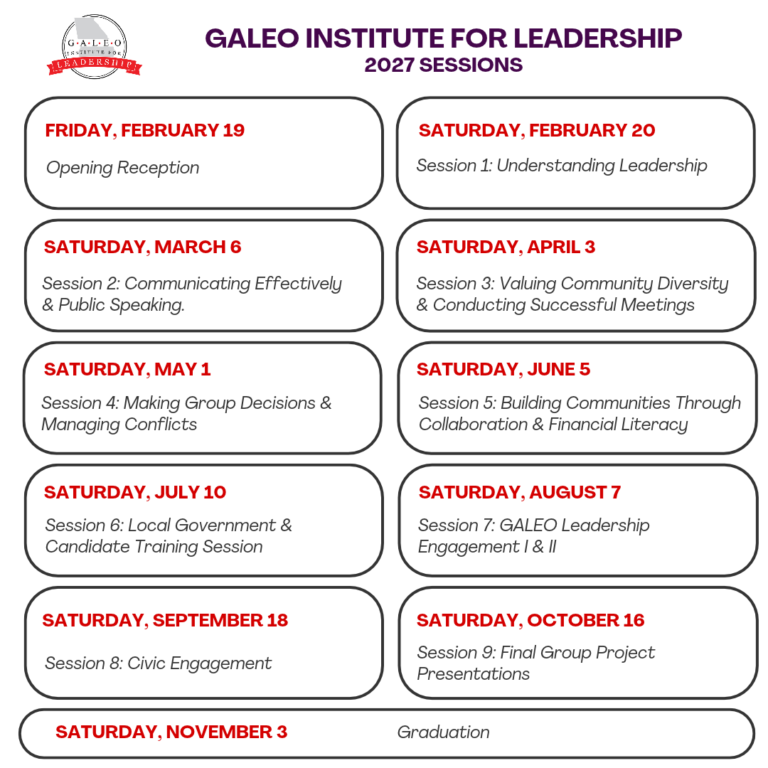
Understanding Leadership: This session introduces the J.W. Fanning Institute for Leadership Development’s approach to community leadership. Participants explore theories of leadership and examine how its principles and practices relate to their own leadership styles, attitudes, and views of community leaders.
Communicating Effectively: Effective communication is central to a leader’s ability to work with others. Participants will examine the stages of the communication process, identify their own communication styles, and consider the styles of others and the impact communication has on communities.
Public Speaking: This session develops participants’ ability to speak confidently in front of an audience. Topics include the types of speeches, how to organize and write remarks, and techniques for effective delivery, with opportunities for practice.
Valuing Community Diversity: This session equips leaders with the cultural awareness, understanding, and skills needed to practice cultural responsiveness, foster inclusion, and lead diverse groups and communities effectively.
Conducting Successful Meetings: Participants examine the factors that contribute to successful and unsuccessful meetings and review the purposes of different types of community meetings. The session also provides an opportunity to refine skills in planning and leading meetings.
Making Group Decisions: This session prepares leaders to engage community members in decision-making processes that promote balanced input and a sense of shared responsibility.
Managing Conflict: This session explores the nature of conflict and its implications for communities. Participants discuss the positive aspects of conflict, examine individual conflict management styles, and review models for conflict resolution.
Building Communities Through Collaboration: This session guides community leaders through the process of building and sustaining partnerships. Through an examination of networking, coordinating, cooperating, and collaborating, participants assess the effectiveness of strategies for establishing collaborative partnerships in their communities.
Financial Literacy: Led by an external partner, this session covers essential personal finance skills, including budgeting, saving, managing money, and planning for retirement through tools such as 401(k) accounts.
Local Government: Developed in partnership with the Carl Vinson Institute of Government, this session introduces participants to Georgia’s local government. Participants learn what local government is, how it operates, and the role community leaders play in its work. The session features one or more guest speakers from local government.
GALEO Institute for Leadership I and II: The topics for these two sessions are determined by the cohort. Midway through the program, participants complete a survey, and the sessions are designed based on the results.
Civic Engagement: This hands-on session takes place in a Latino community, where participants go door-to-door to help residents verify their voter registration and encourage them to vote. Participants who do not feel safe or comfortable canvassing may take part in an alternative activity.
Group Project Presentations: At the start of the program, participants are assigned to groups that work throughout the nine months on a project benefiting a community organization. In this final session, each group presents its project.
Supplementary Workshops and Speakers: Besides learning from the research-based curriculum, the GIL Program brings in relevant community leaders and guest speakers who currently live out the skills and values discussed in training. Participants will hear from people in the field and manage the different issues brought up throughout the program. This allows participants the opportunity to see the curriculum applied on a first-hand basis and to ask questions. Besides having leaders speak on the specific topic at hand, we bring in speakers relevant to the interests of the current program participants and tailor these workshops also to meet the needs of the participants going through the program. This holistic approach allows participants to develop skills by using an effective curriculum, hearing from current leaders, and learning within the context of their particular goals and interests.
Community Projects: As part of the GALEO Institute for Leadership, participants will be required to carry out a group community project. These projects will be developed together within small groups of fellow participants and should encompass some sort of ultimate benefit for the community (as defined by the group). Participants will have the freedom to select their own scope of work within specific guidelines and implement the project from start to finish. GALEO provides a stipend for some project expenses. Updates on group projects are presented at the GIL sessions, and feedback/support from GALEO staff is provided. Towards the end of the course, the various groups will present their projects to the entire cohort and multiple stakeholders.
The GALEO Institute for Leadership (GIL) is a nine-month program that requires active participation, consistent attendance, and a commitment to leadership development and community engagement.
Sessions are typically held on Saturdays from 9:00 a.m. to 5:00 p.m.
To remain in good standing and meet graduation requirements, participants are expected to adhere to the following guidelines:
Successful completion of GIL reflects a participant’s commitment to leadership development, collaboration, accountability, and meaningful community impact.
We are excited to connect with individuals who are passionate about leadership, community engagement, and creating meaningful change across Georgia.
The application process consists of three steps:
For questions about the application process, please contact our program coordinator:
Ana Rocío Álvarez Bríñez | aalvarez@galeo.org
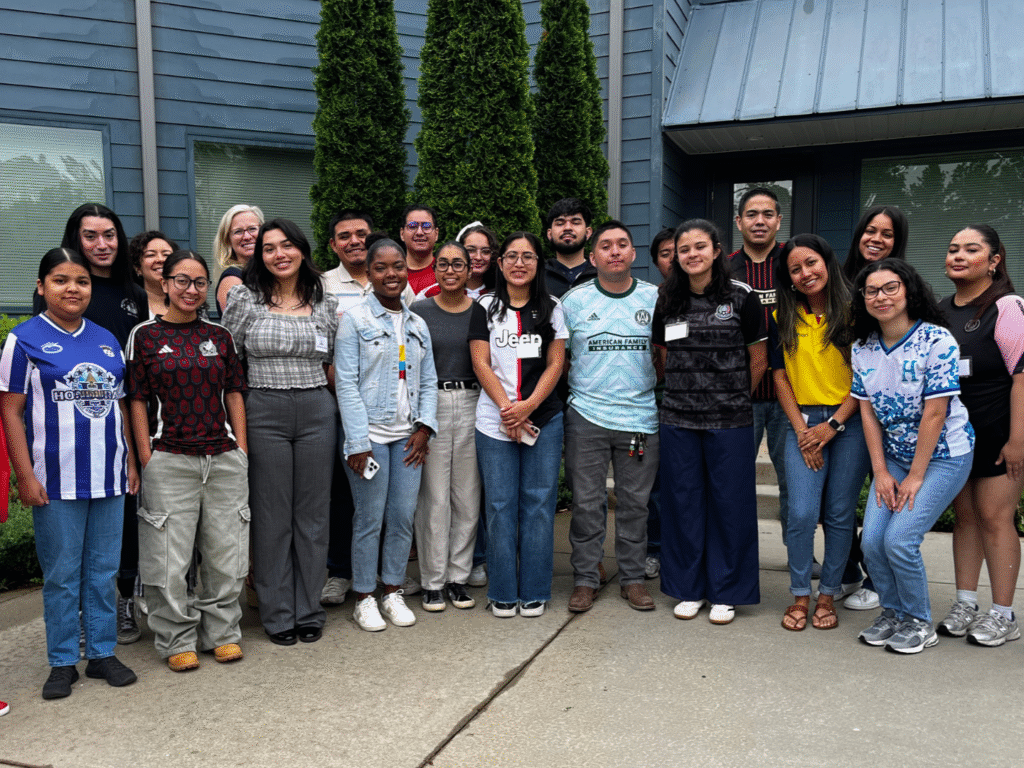
The GALEO Institute for Leadership welcomes individuals from all backgrounds who are interested in strengthening their leadership skills and making a positive impact in their communities.
Applicants must be at least 18 years old to participate.
GIL seeks individuals who demonstrate a commitment to community service, leadership development, and collaboration. Successful candidates typically demonstrate:
GIL values diverse experiences and perspectives. Applicants do not need to hold a formal leadership position to demonstrate leadership potential.
Adult: $250.00
Student: $50.00
Participation dues are payable at the beginning of the program. Payment plans may be available upon approval by the GALEO Leadership Department.
Limited scholarships covering 50% of participation dues are available to eligible applicants who demonstrate financial need. Supporting documentation may be required.
Scholarship recipients are expected to attend all program sessions. Failure to meet this requirement may result in forfeiture of the scholarship and responsibility for the remaining participation dues.
For scholarship information, please contact the GALEO Leadership Department at leadership@galeo.org.